Don't Miss an Article
Join thousands of other innovators receiving our newsletter.
4 Steps to Build an Agile Classroom That Sparks Student Ownership
- K12 Edu | .25 PDU/SEU/CEU
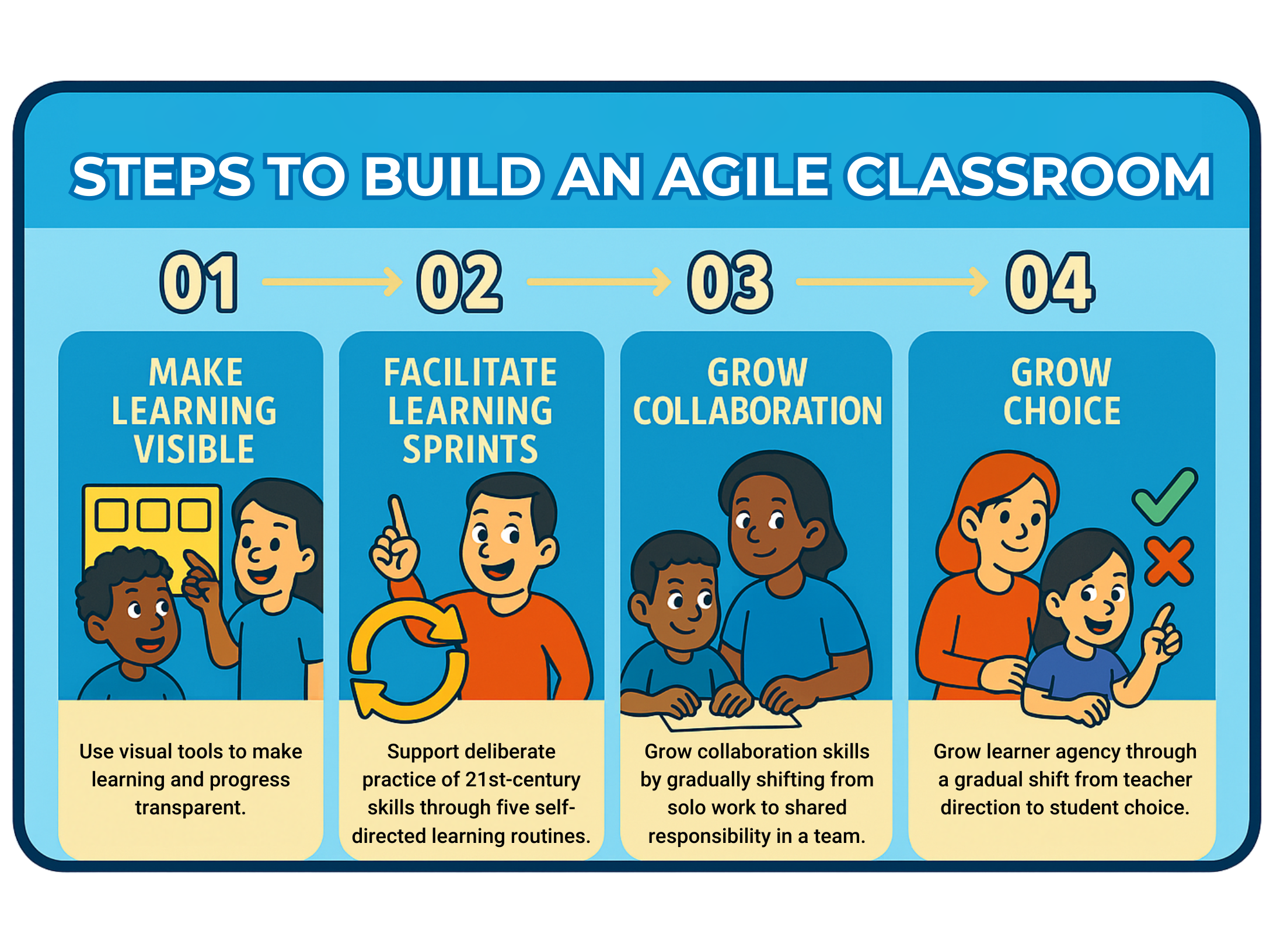
Are you ready to transform your classroom into a space where students lead, create, and innovate? These four practical steps will guide you in cultivating an Agile Classroom—where students actively take charge of their learning journey. Just 4 steps to create authentic 21st century skill development and amazing engagement. We are not promising it will not be without road bumps, but, we promise, it is worth the journey.
Step 1: Make Learning Visible
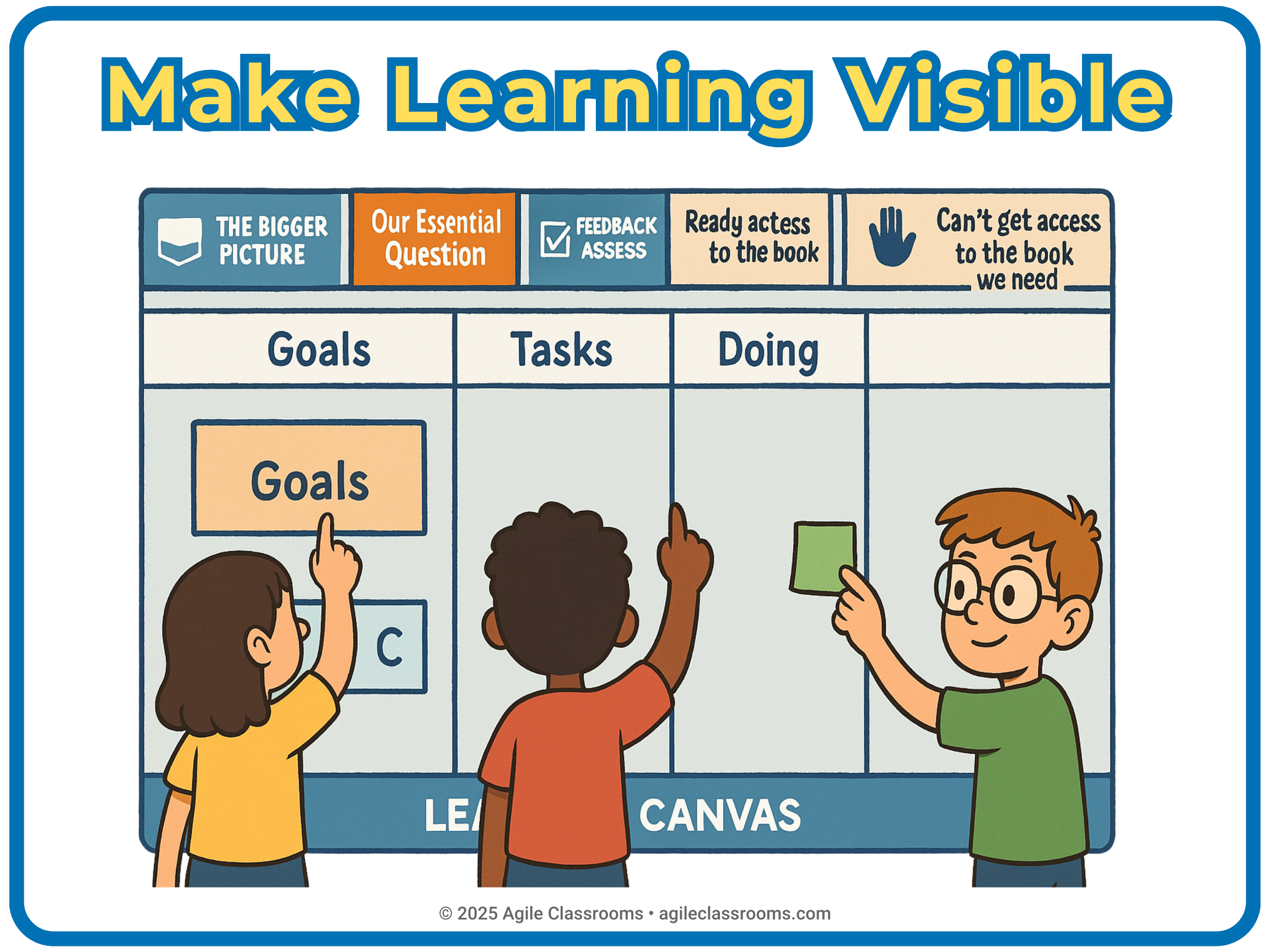
Creating an Agile Classroom begins with making learning visible. Clearly defined objectives, progress tracking, and outcomes empower your students to see exactly where they are and where they need to go next. Using visible tools like the Learning Canvas, you and your students can effortlessly monitor progress on projects, assignments, and assessments. This clarity fosters student ownership, enhances collaboration, and drives collective success.
Step 2: Facilitate Learning Sprints
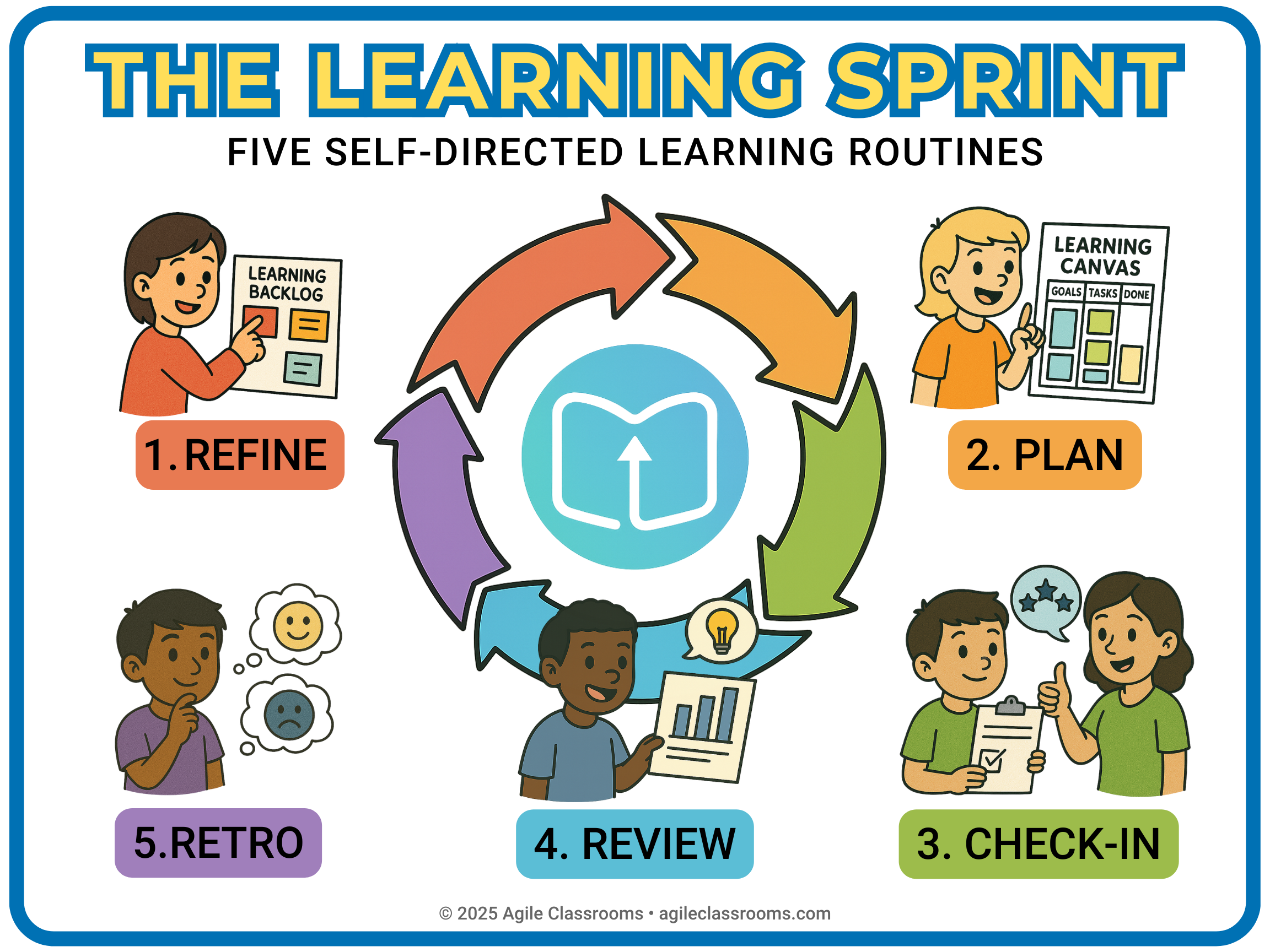
The next crucial step is facilitating Learning Sprints—short, focused cycles packed with five structured self-directed learning routines. These routines empower students to regularly:
Learning Sprints enable consistent feedback and steady growth, promoting deep learning, self-direction, and robust collaboration skills.
Step 3: Grow Collaboration
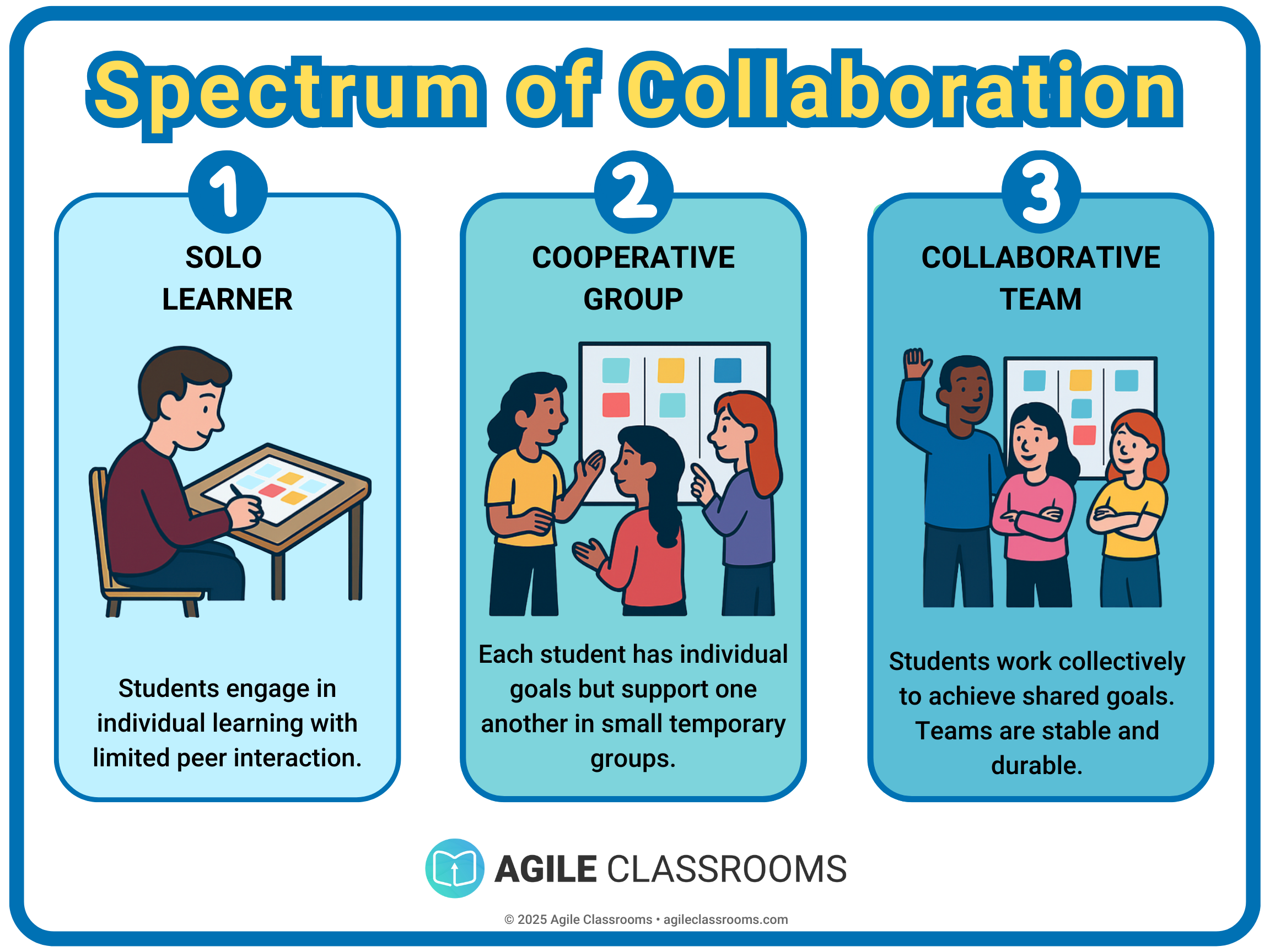
Collaboration is at the heart of an Agile Classroom. Regularly practicing skills like conflict resolution, peer feedback, and leveraging each other’s strengths nurtures strong collaborative teams. Aim for stable groups of 3-5 students to build trust and resilience. Using the Spectrum of Collaboration, you can gradually advance your students from individual tasks to genuine teamwork, fostering essential real-world skills.
Step 4: Grow Choice
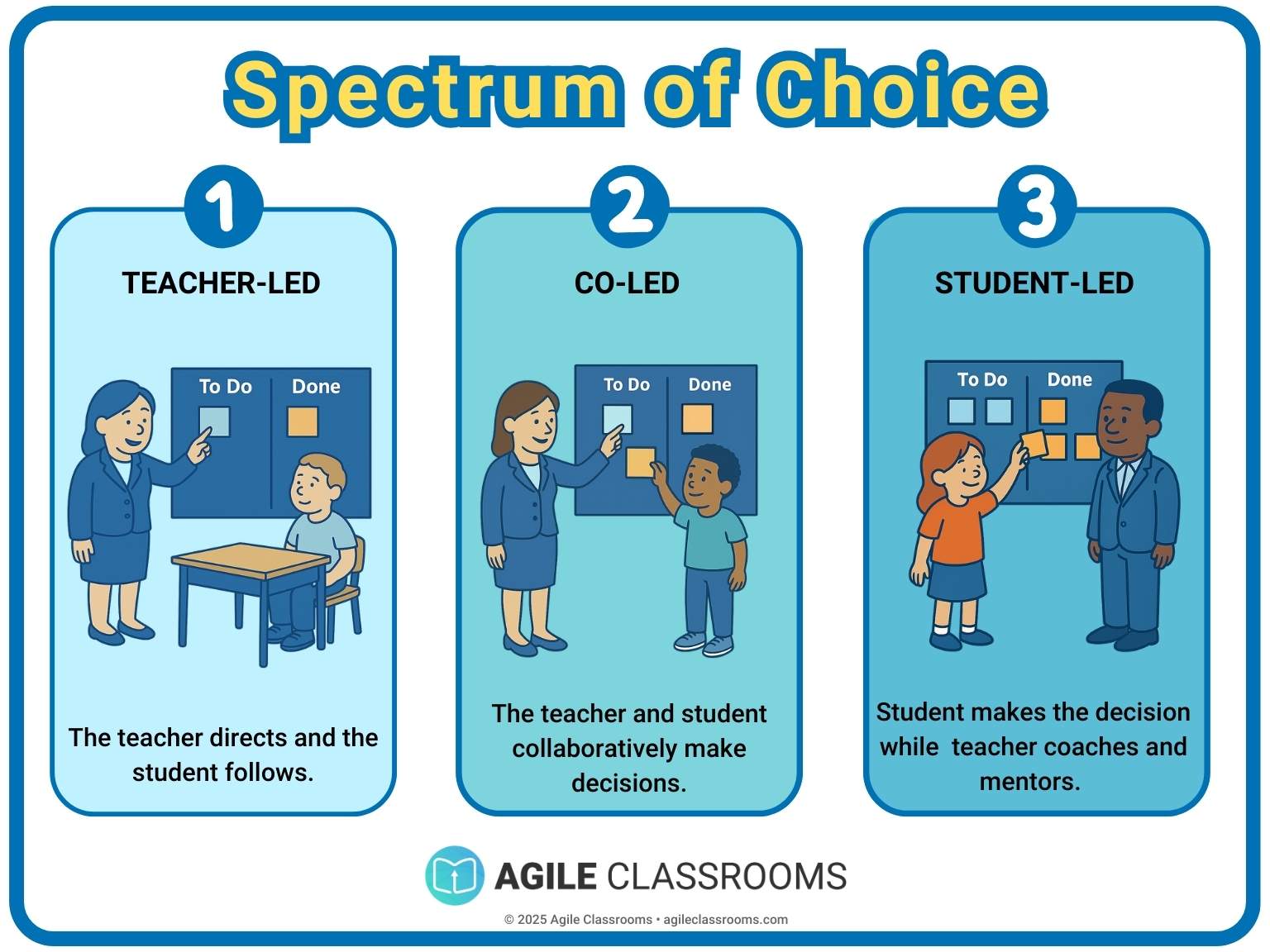
The final step is strategically increasing student choice and autonomy. More choice leads to increased motivation and engagement—but too much autonomy too quickly can create disorder. Incrementally scaffold student self-direction using the Spectrum of Choice, gradually transitioning from teacher-led decisions to student-driven control. This approach ensures students develop critical decision-making skills responsibly and effectively.
Iterate to Innovate
Remember, these four steps are iterative and interconnected. Visibility supports collaboration, strong collaboration enhances student choice, and informed choices inspire deeper engagement and creativity. Continuously reflect on your classroom experiences, refine your methods, and adapt to your students’ evolving needs.
Ready to Get Started?
Take the first step towards building a student-led Agile Classroom today.
Explore our Agile Classrooms Framework and learn how to empower your students through our Certified Agile Classrooms Teacher (ACT) Workshops.
Give your students the tools they need to thrive in the classroom—and beyond.
What step will you take first to ignite student-led learning in your classroom?
🏅 Earn 0.25 SEUs/PDUs for reading this!
Renew your PMI Project Management Professional (PMP) or Scrum Alliance certifications such as the Certified Scrum Master (CSM) or Certified Scrum Product Owner (CSPO), or other professional credentials.
0 comments
PDUS/SEUS
This article counts toward .25 PDUS/CEUS. Get more credits by reading more articles 👉
Enjoyed this post? Let’s keep going.
Whether you're leading a team, managing a product, or transforming a classroom, I have resources to help you work smarter and get real results.
Click below for what works for you:
Free Resources
More Articles
Engaging Workshops
About John
Hey, I’m John. I help leaders, educators, and product innovators work smarter and build things that matter.
I cut through the noise to bring modern methods that actually work. Whether it’s leadership, product management, or education, the goal is the same—less friction, more impact. No fluff. No jargon. Just real-world insights to help you get better, faster.
💡 What You’ll Get Here:
✔ Smarter ways to lead and collaborate without the micromanaging
✔ Fresh, no-nonsense takes on modern work and education
✔ Tools and tactics to make work easier, faster, and more effective
Work doesn’t have to be chaotic.
Let's connect!